
The incline press is done with the bench backrest raised. That incline shifts the work to the upper chest, near the collarbone.
With dumbbells, each arm works on its own and the grip is freer. The main question is how much to incline the bench.
Quick summary
- Muscles: chest (more the upper part), the front of the shoulder and the triceps
- Level: beginner to intermediate
- Equipment: an adjustable bench and a pair of dumbbells
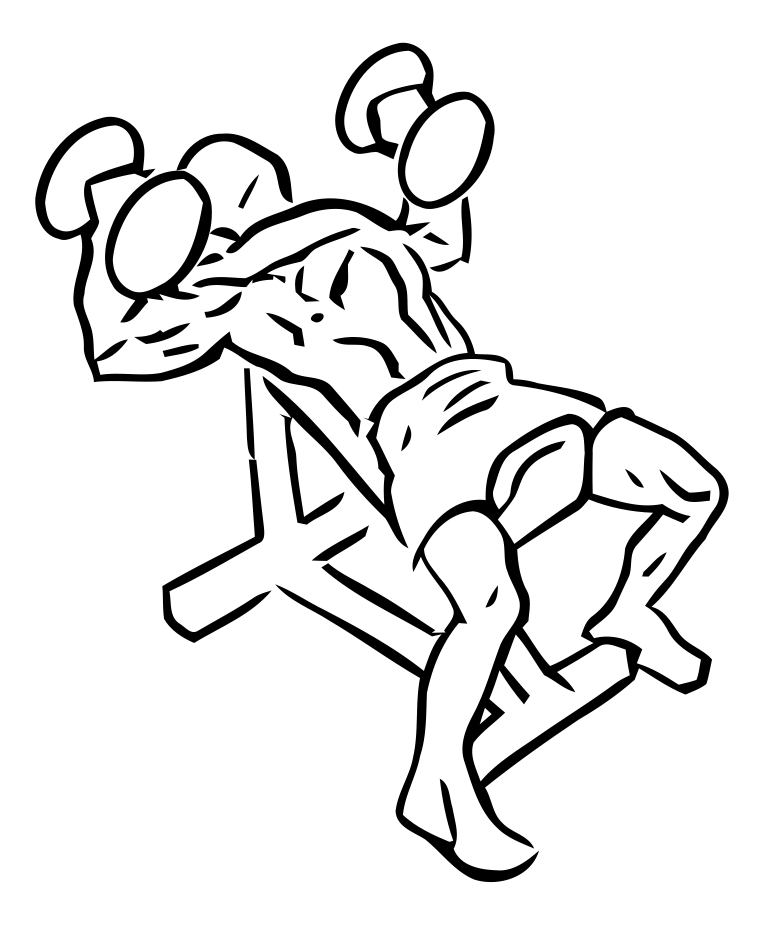
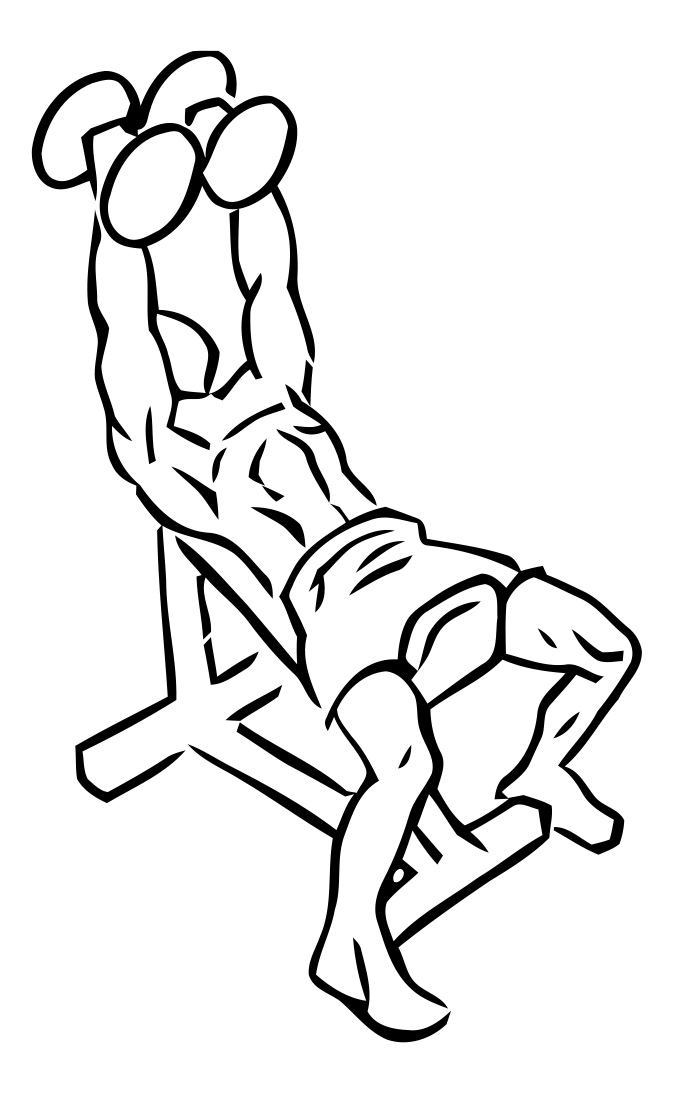
How to do the incline dumbbell press
- Set the bench backrest at about 30 degrees.
- Sit with your back supported, a dumbbell in each hand, and bring the dumbbells to shoulder height.
- Press the dumbbells up until your arms are straight, above the chest.
- Lower under control until the dumbbells are beside the chest.
- Press again, breathing out on the way up.
To finish the set, bring the dumbbells to your chest and rest them on your thighs as you sit up. Do not drop the dumbbells to the sides.
Common mistakes
- A bench that is too steep. Above 45 degrees the exercise becomes more of a shoulder move than a chest move.
- The back coming off the backrest. The back and the hips stay supported.
- The dumbbells clanking at the top. Stop before they touch and keep control.
- Lowering without control. The lowering phase is slow, without letting the dumbbell drop.
Variations
Easier
Light dumbbells, or a push-up with your hands on a sturdy bench.
Standard
An incline dumbbell press at about 30 degrees.
Harder
More load while keeping the technique, or a slower lowering phase.
What the studies show
In a study with 30 trained adults, the upper chest was more activated with the bench at 30 degrees. Above 45 degrees, the front of the shoulder started to work more and chest performance dropped (Rodríguez-Ridao and colleagues, 2020). The study used a barbell, not dumbbells.
Sets to start with
For beginners, the American College of Sports Medicine position stand suggests a load that allows 8 to 12 reps, 2 to 3 times a week. When you can do 1 or 2 more reps than planned, increase the load a little: the document talks about 2% to 10% (ACSM, 2009).
In practice, 2 to 3 sets with 1 to 2 minutes of rest are a good starting point. That number of sets is a practical suggestion, not a rule.
Who should be careful
Anyone who feels shoulder pain can try a shallower incline and should see a physical therapist if the pain continues. Uncontrolled high blood pressure and heart problems call for medical clearance before heavy strength training. Sharp pain is a signal to stop.
Informational text. It doesn’t replace an assessment by a certified trainer, physical therapist or doctor.
Read also
Where to go next
The chest grows with regular training, food and sleep. The full picture is in building muscle.
References
- Rodríguez-Ridao D et al. Effect of Five Bench Inclinations on the Electromyographic Activity of the Pectoralis Major, Anterior Deltoid, and Triceps Brachii during the Bench Press Exercise. Int J Environ Res Public Health. 2020;17(19). https://pubmed.ncbi.nlm.nih.gov/33049982/
- American College of Sports Medicine. American College of Sports Medicine position stand. Progression models in resistance training for healthy adults. Med Sci Sports Exerc. 2009;41(3):687-708. https://pubmed.ncbi.nlm.nih.gov/19204579/
Image credits
- Everkinetic 0061 (dumbbell-incline-bench-press) illustration, by Greg Priday / Everkinetic project — https://github.com/everkinetic/data — CC BY-SA 4.0. Used without changes.