
The step-up is climbing onto a bench or box with one leg, like going up a tall step, and lowering under control. It is simple, you can do it at home, and it works one leg at a time.
It starts with just your bodyweight. When that gets easy, a dumbbell in each hand makes the difference.
Quick summary
- Muscles: glutes and thigh (quadriceps), with help from the hamstrings and the calf
- Level: beginner
- Equipment: a sturdy bench or box; dumbbells in the loaded versions
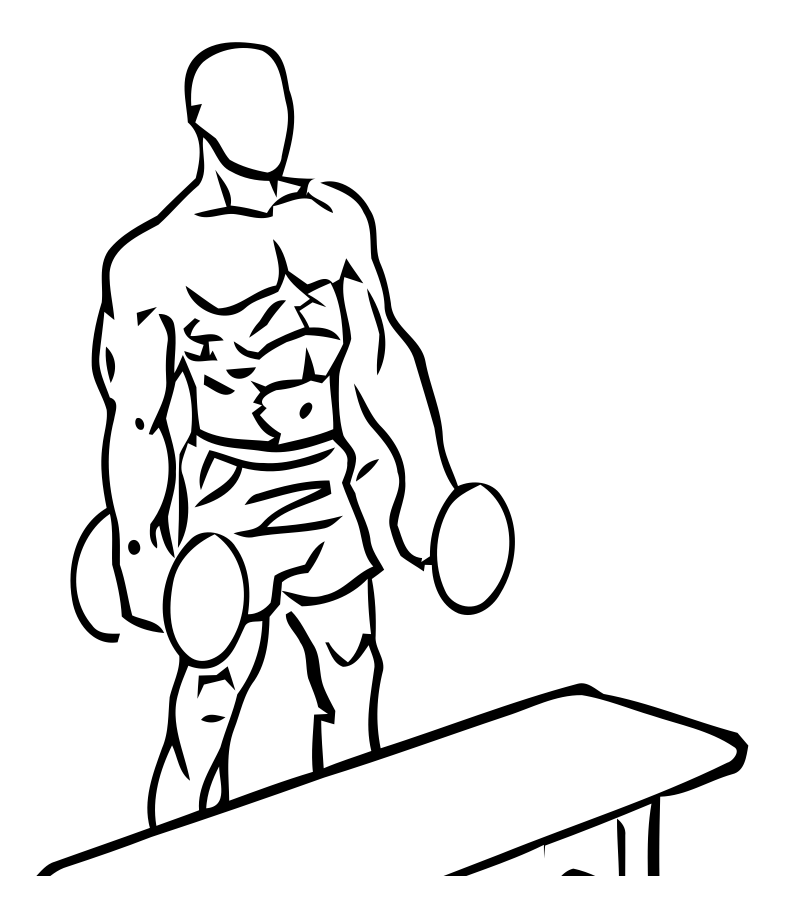
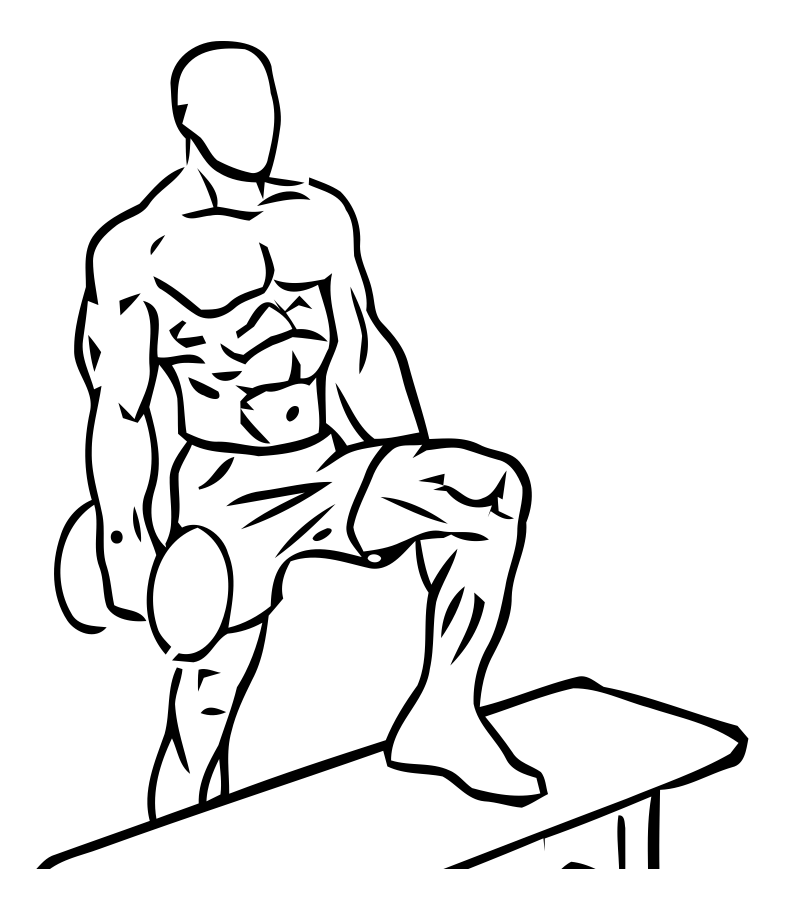
How to do the step-up
- Stand facing a sturdy bench or box that will not slide.
- Plant the whole foot of one leg on top of the bench.
- Step up by pushing with the top leg, without pushing off with the bottom one.
- Stand tall on the bench for a moment.
- Lower slowly, back leg first, and repeat. Finish one side, then switch.
To start, use a height where the top knee is at hip height or below it.
Common mistakes
- Pushing off with the bottom leg. The top leg is the one that lifts you.
- The front knee caving in. The knee points in the same direction as the toes.
- An unstable or overly tall bench. Choose a firm surface and a height you can control.
- Dropping on the way down. The lowering phase is controlled.
Variations
Easier
A lower step, holding onto a support.
Standard
A step-up with just your bodyweight.
Harder
With a dumbbell in each hand, as in the illustration, or a lateral step-up, with the bench beside you.
What the studies show
A systematic review on the gluteus maximus found the step-up and its variations among the exercises with the highest activation of that muscle, above 60% of a maximal contraction (Neto and colleagues, 2020).
Sets to start with
For beginners, the American College of Sports Medicine position stand suggests a load that allows 8 to 12 reps, 2 to 3 times a week. When you can do 1 or 2 more reps than planned, increase the load a little: the document talks about 2% to 10% (ACSM, 2009).
In practice, 2 to 3 sets with 1 to 2 minutes of rest are a good starting point. That number of sets is a practical suggestion, not a rule.
Who should be careful
Anyone with knee or hip pain, or a balance problem, should start with a low step and a hand support and, if possible, with guidance from a physical therapist or certified trainer. Sharp knee pain is a signal to stop.
Informational text. It doesn’t replace an assessment by a certified trainer, physical therapist or doctor.
Read also
- Lunge: how to do stationary, reverse and walking lunges
- Squat: how to do it right, common mistakes and variations
- Glute bridge: how to do it at home and progress to the hip thrust
- Training: exercises, home gear and books
Where to go next
Glutes and thighs grow with a load that increases little by little, protein and sleep. See building muscle.
References
- Neto WK et al. Gluteus Maximus Activation during Common Strength and Hypertrophy Exercises: A Systematic Review. J Sports Sci Med. 2020;19(1):195-203. https://pubmed.ncbi.nlm.nih.gov/32132843/
- American College of Sports Medicine. American College of Sports Medicine position stand. Progression models in resistance training for healthy adults. Med Sci Sports Exerc. 2009;41(3):687-708. https://pubmed.ncbi.nlm.nih.gov/19204579/
Image credits
- Everkinetic 0137 (step-ups-with-dumbbells) illustration, by Greg Priday / Everkinetic project — https://github.com/everkinetic/data — CC BY-SA 4.0. Used without changes.