

A mass gainer is a powder designed to add calories to your day. It usually mixes a lot of carbohydrate (like maltodextrin) with some protein. The idea is convenience: shake it with milk or water and drink.
If you struggle to gain weight, it can help. But a homemade shake with milk, banana, oats and peanut butter delivers similar calories, with more fiber and ingredients you already know. The choice comes down to convenience, cost and what the gainer label actually says.
Not medical advice. If you have diabetes, lactose intolerance, a peanut allergy or another health condition, adjust the recipe with a professional.
Do: Work out how many calories you are missing each day and use the shake to fill the gap.
Avoid: Picking a gainer by its name; what matters is the table: protein, carbs and where the calories come from.
Quick facts
How much extra to eat
One review suggests a surplus of about 10% to 20% of calories, gaining 0.25% to 0.5% of body weight per week for beginners and intermediates.
Protein
Suggested range for building muscle: 1.6 to 2.2 g per kg per day.
Watch out
Mass gainers vary a lot. Some have little protein and lots of sugar. Read the serving size and the table.
What the science says
Surplus. Iraki and colleagues (2019) reviewed nutrition for natural bodybuilders outside the dieting phase. They suggest eating about 10% to 20% above maintenance and gaining 0.25% to 0.5% of body weight per week. More than that tends to become fat. Advanced lifters should be even more conservative.
How much is needed. Slater and colleagues (2019) point out that nobody knows the exact surplus needed to build muscle. Textbook math tends to be simplistic. In practice, track your weight and adjust.
Protein. The meta-analysis by Morton and colleagues (2018) found that extra muscle gains from protein level off around 1.6 g per kg per day. In other words: once protein is covered, what you need to gain weight is calories — from carbs and fat.
What this means for the shake. There is no magic ingredient. Mass gainers and homemade shakes work for the same reason: they add calories you were not managing to eat.
Recipe: homemade shake of about 550 kcal
- 300 ml whole milk
- 1 medium banana (about 100 g)
- 40 g rolled oats (about 4 tablespoons)
- 20 g peanut butter (a little over 1 tablespoon)
- Optional: 1 scoop of whey (add the protein and calories from the label)
Blend everything for 30 seconds. Without whey, the math using USDA values comes to about 550 kcal, 20 g protein, 23 g fat, 69 g carbohydrate and 7 g fiber. With a scoop of whey of about 30 g, protein usually goes past 40 g.
Affiliate disclosure: This article contains affiliate links (sponsored) to Amazon.com.br, a Brazilian store: prices are in Brazilian reais (BRL) and products ship only within Brazil. If you buy through these links, Xalau. may earn a commission at no extra cost to you. This doesn’t change our analysis or the price. Details in our affiliate policy.
| Point | Mass gainer | Homemade shake |
|---|---|---|
| Convenience | High: just mix | Medium: needs a blender |
| Control over ingredients | Depends on the label | Full |
| Fiber | Usually low | Yes (oats and banana) |
| Protein | Varies a lot by brand | Adjustable with whey |
| Cost | Compare per serving | Compare per serving |
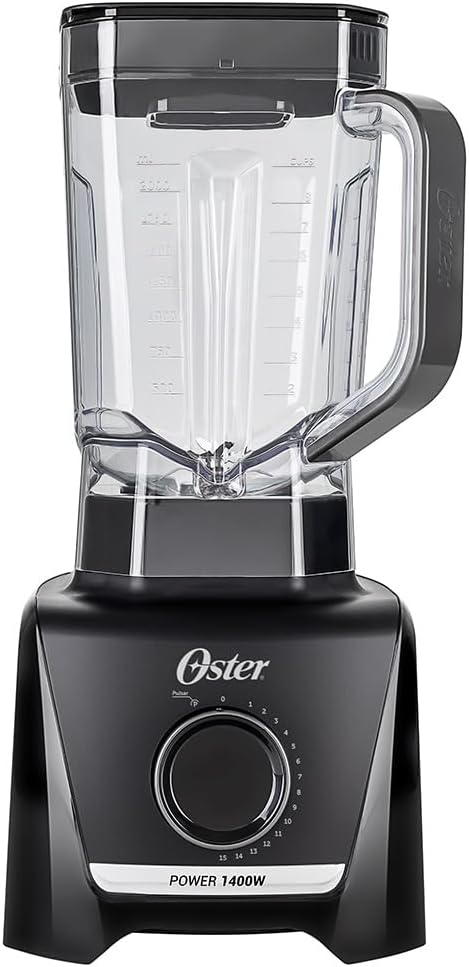
Sponsored link · Amazon.com.br (Brazil) · learn more
Oster 1400 Full blender, 127 V
For smoothies and juices; 127 V version, so check the voltage.
See price on Amazon.com.br
Sponsored link · Amazon.com.br (Brazil) · learn more
Integralmédica 100% Pure Whey, 900 g
Concentrate, 900 g. 21 g of protein per serving, according to the manufacturer.
See price on Amazon.com.brHow to use it
- Start with the math. Add up what you eat on a normal day and add 10% to 20%.
- Weigh yourself once a week. If your weight does not go up in 2 or 3 weeks, add more calories.
- If you buy a gainer, check three things. Protein per serving, sugar and serving size (sometimes it is 3 or 4 scoops).
- Drink it between meals. That way it adds to your day instead of killing your appetite for lunch.
- You can swap the milk. Lactose-free milk or a plant drink with protein works; check the calories.
Read next: muscle gain: what actually works, quick whey protein recipes, the whey protein guide and body types: why your body type does not decide everything.
Summary
- Mass gainers and homemade shakes work for the same reason: they add calories
- Suggested surplus: 10% to 20%, gaining 0.25% to 0.5% of body weight per week
- Once protein is covered, what is missing is calories
- A homemade shake gives you control over ingredients and fiber
- If you buy a gainer, check protein, sugar and serving size
Tip: if liquids fill you up less, a shake is a good way to eat more without feeling stuffed. Have it mid-afternoon or after training.
Not sure what makes sense for you? Take the quiz Which supplement fits your goal? (in Portuguese) — it takes 1 minute and promises no miracles.
Sponsored links
Other products mentioned in this article. The links go to Amazon.com.br (Brazil): prices in BRL, shipping only within Brazil.

Sponsored link · Amazon.com.br (Brazil) · learn more
X Roots fine rolled oats — 1 kg
Check the label and the product page.
See price on Amazon.com.brSponsored link · Amazon.com.br (Brazil) · learn more
DaColônia Whole Peanut Butter Zero — 500 g
Check the label and the product page.
See price on Amazon.com.brReferences
- Iraki J et al. Nutrition recommendations for bodybuilders in the off-season: a narrative review. Sports (Basel). 2019;7(7):154. https://pubmed.ncbi.nlm.nih.gov/31247944/
- Slater GJ et al. Is an energy surplus required to maximize skeletal muscle hypertrophy associated with resistance training. Front Nutr. 2019;6:131. https://pubmed.ncbi.nlm.nih.gov/31482093/
- Morton RW et al. A systematic review, meta-analysis and meta-regression of the effect of protein supplementation on resistance training-induced gains in muscle mass and strength in healthy adults. Br J Sports Med. 2018;52(6):376-384. https://pubmed.ncbi.nlm.nih.gov/28698222/
- U.S. Department of Agriculture, FoodData Central: Milk, whole, 3.25% (FDC 172217); Bananas, raw (FDC 173944); Cereals, oats, regular and quick, not fortified, dry (FDC 173904); Peanut butter, smooth style, without salt (FDC 172470). https://fdc.nal.usda.gov/