

Jumping jacks are the ones from school gym class: jump while opening your legs and arms, then close them again. They don’t build much strength, but they warm up your body, raise your heart rate and fit easily into a warm-up or a short home workout.
If you have sensitive knees or a downstairs neighbor, there’s a no-jump version that delivers almost the same warm-up effect.
Quick summary
- Muscles: calves, thighs, glutes and shoulders, with a focus on cardio
- Level: beginner
- Equipment: none (cushioned sneakers help)
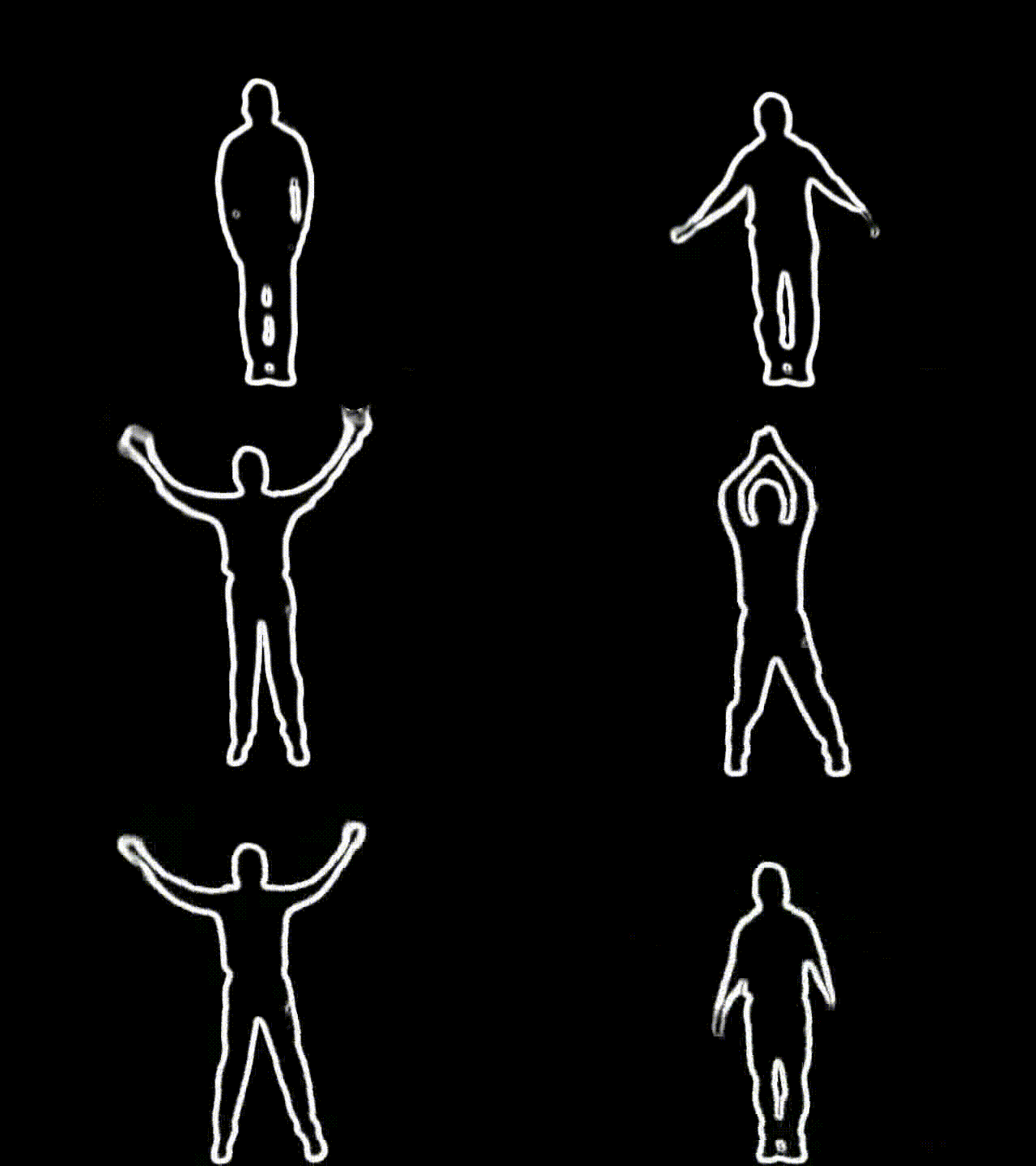

How to do jumping jacks
- Stand with your feet together and your arms at your sides.
- Do a low jump, opening your feet a little wider than your shoulders, while your arms rise out to the sides to near your head.
- With another jump, bring your feet together and lower your arms.
- Land on the balls of your feet, let your heels touch down lightly and keep your knees slightly bent.
- Choose a pace at which you can still breathe. If you lose coordination, slow down.
Common mistakes
- Landing with a locked leg and your heels slamming the floor.
- Knees caving in when your legs open.
- Jumping too high. No need: just get your feet off the floor.
- Hunched shoulders and stiff arms. Relax your shoulders and let your arms follow the rhythm.
Variations
Easier
Low impact: instead of jumping, step one foot out to the side at a time while your arms rise. It works in apartments and for people with sensitive knees.
Standard
Jumping jacks with a jump.
Harder
Squat jacks (open your legs and drop into a half squat) or faster blocks, always with a soft landing.
Sets to start with
In a warm-up, 2 sets of 20 to 30 seconds. In a short workout, 4 to 6 blocks of 30 seconds of exercise and 30 of rest, 2 or 3 times a week. If it’s been a while since you last jumped, start with the low-impact version.
To keep the weekly math in mind: the World Health Organization recommends that adults accumulate 150 to 300 minutes of moderate activity per week, or 75 to 150 of vigorous activity, and also do strength training regularly (Bull and colleagues, 2020). A few blocks of jumping jacks count toward that total, but they don’t take the place of strength training.
Who should be careful
Knee, ankle or shin pain during the jumps is a sign to go back to the low-impact version and, if it continues, to see a physical therapist. Leaking urine when jumping isn’t “normal for your age”: it’s worth seeing a pelvic floor physical therapist. People with heart conditions should get medical clearance for intense workouts.
Informational text. It doesn’t replace an assessment by a certified trainer, physical therapist or doctor.
Read also
- Burpee: how to do it and the no-jump version
- Squat: how to do it right, common mistakes and variations
- Lunge: stationary, reverse and walking
- Water bottle: insulated or regular, and what size
Where to go next
Jumping jacks are a good warm-up and help you burn a little more during the day. To really lose fat, they need to come with an adjusted diet, and that’s what the weight-loss guide covers. If you’re just getting back to training, start with what to take and what to avoid in your first months at the gym.
References
- Bull FC et al. World Health Organization 2020 guidelines on physical activity and sedentary behaviour. Br J Sports Med. 2020;54(24):1451-1462. https://pubmed.ncbi.nlm.nih.gov/33239350/
Image credits
- “Jumpingjacks.gif” by Wensceslao — https://commons.wikimedia.org/wiki/File:Jumpingjacks.gif — CC BY-SA 4.0. Used without changes.
The featured image for this post was produced for Xalau.