
In a pull-up you hang from a bar and pull your body up until your chin clears it. It is one of the most complete back exercises, and plenty of people need time before they can do their first rep.
There are two main grips. In the overhand grip (pronated), the palms face away from you. In the underhand grip, also called a chin-up, the palms face you. Both work the back well.
Quick summary
- Muscles: back (latissimus dorsi) and biceps, with help from the trapezius, the chest and the forearm
- Level: intermediate (with beginner versions)
- Equipment: just your bodyweight and a sturdy pull-up bar

How to do a pull-up
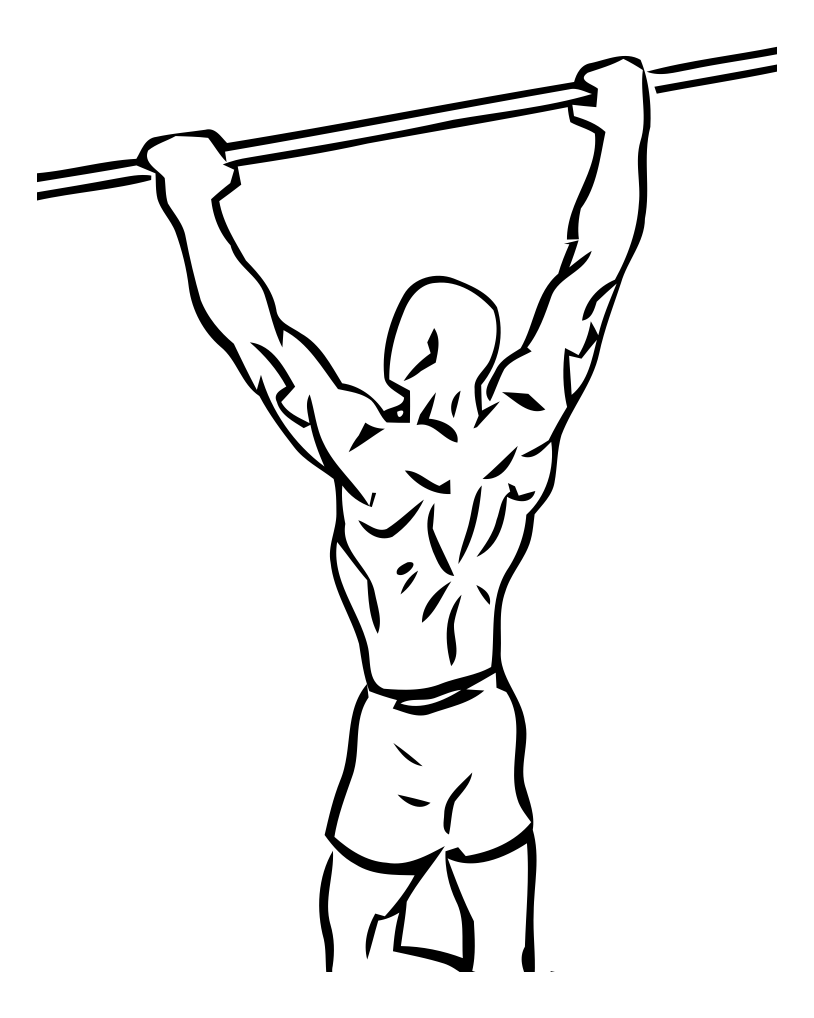
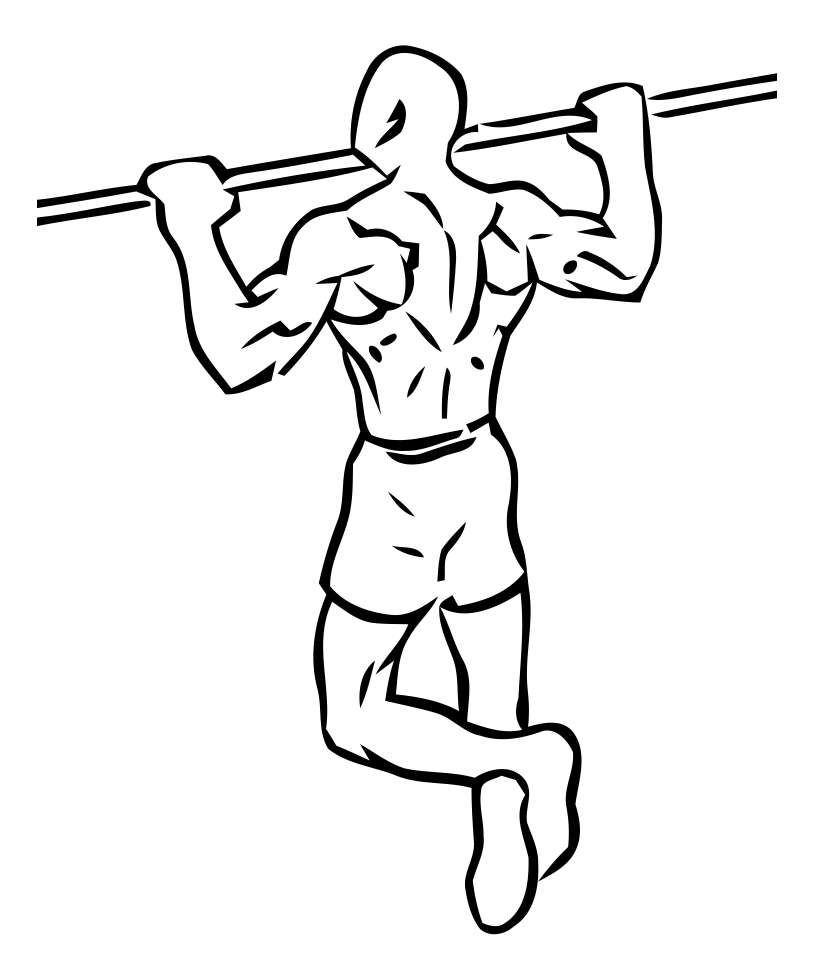
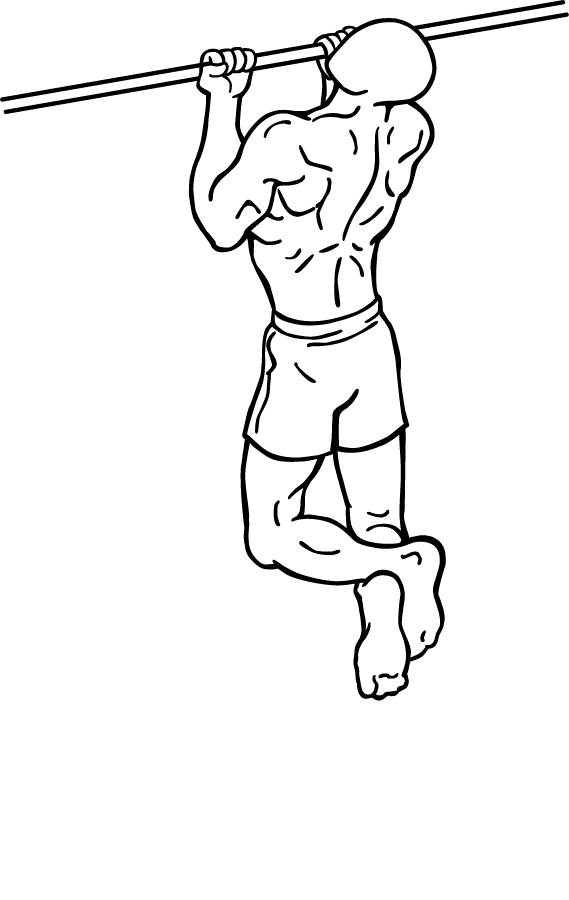
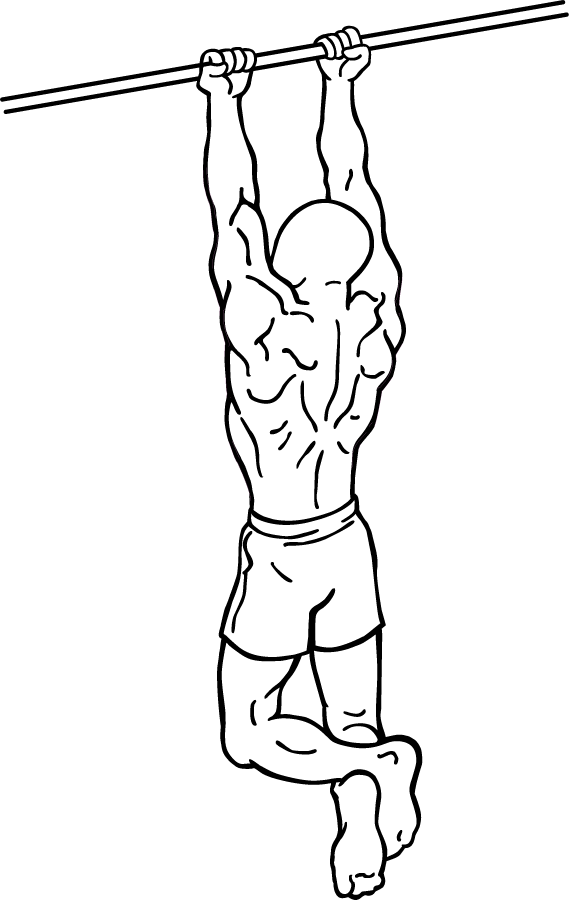
- Hold the bar with your palms facing away, a little wider than your shoulders. For a chin-up, palms toward you, about shoulder-width apart.
- Hang with your arms extended and your shoulders away from your ears.
- Pull your body up until your chin clears the bar, driving your elbows down.
- Lower under control until your arms are straight.
Common mistakes
- Swinging the legs to get up. Momentum takes the work away from the back. Keep your body tight.
- Half reps. Lower until your arms are straight, under control.
- Shrugged shoulders at the bottom. Before you pull, set your shoulders down a little.
- Dropping on the way down. The lowering phase trains you too.
Variations
Easier
Inverted rows, then a band-assisted pull-up or an assisted machine. Another option is the negative: step up with a bench and lower slowly, in 3 to 5 seconds.
Standard
Overhand or underhand pull-up, with just your bodyweight.
Harder
More reps, a pause with the chin above the bar, or extra weight attached to your body.
What the studies show
In a study with 25 adults, the latissimus dorsi was the most activated muscle in both the overhand pull-up and the chin-up. In the chin-up, the biceps and the chest worked more. In the overhand pull-up, the lower trapezius worked more (Youdas and colleagues, 2010). It is worth training both.
Sets to start with
For beginners, the American College of Sports Medicine position stand suggests 8 to 12 reps per set, 2 to 3 times a week (ACSM, 2009). With bodyweight work, when it gets easy, move to a harder variation instead of just piling on endless reps.
In practice, 2 to 3 sets with 1 to 2 minutes of rest are a good starting point. That number of sets is a practical suggestion, not a rule.
Who should be careful
Pain in the shoulder, elbow or wrist when pulling calls for an easier version and, if it continues, an assessment by a physical therapist. Check that the bar is solid and can hold your weight before you use it. Sharp pain is a signal to stop.
Informational text. It doesn’t replace an assessment by a certified trainer, physical therapist or doctor.
Read also
- Push-up: how to do it, adapt it and progress
- Plank: how long to hold it and how to do it
- Burpees: how to do them and the no-jump version
- Training: exercises, home gear and books
Where to go next
Strength and bodyweight go together in the pull-up. Both are covered in building muscle and losing weight without miracles.
References
- Youdas JW et al. Surface electromyographic activation patterns and elbow joint motion during a pull-up, chin-up, or perfect-pullup™ rotational exercise. J Strength Cond Res. 2010;24(12):3404-14. https://pubmed.ncbi.nlm.nih.gov/21068680/
- American College of Sports Medicine. American College of Sports Medicine position stand. Progression models in resistance training for healthy adults. Med Sci Sports Exerc. 2009;41(3):687-708. https://pubmed.ncbi.nlm.nih.gov/19204579/
Image credits
- Everkinetic 0087 (pull-ups) illustration, by Greg Priday / Everkinetic project — https://github.com/everkinetic/data — CC BY-SA 4.0. Used without changes.
- “Chin-ups-1.png”, by Everkinetic — https://commons.wikimedia.org/wiki/File:Chin-ups-1.png — CC BY-SA 3.0. Used without changes.
- “Chin-ups-2.png”, by Everkinetic — https://commons.wikimedia.org/wiki/File:Chin-ups-2.png — CC BY-SA 3.0. Used without changes.
