
The hammer curl looks like the biceps curl, but with the palms facing your body the whole time, as if you were holding a hammer. That grip is called a neutral grip.
It does not replace the biceps curl. It is there to vary the stimulus on the arm, and it is an option for anyone who is uncomfortable with a palms-up grip.
Quick summary
- Muscles: biceps and brachioradialis (a forearm muscle)
- Level: beginner
- Equipment: a pair of dumbbells
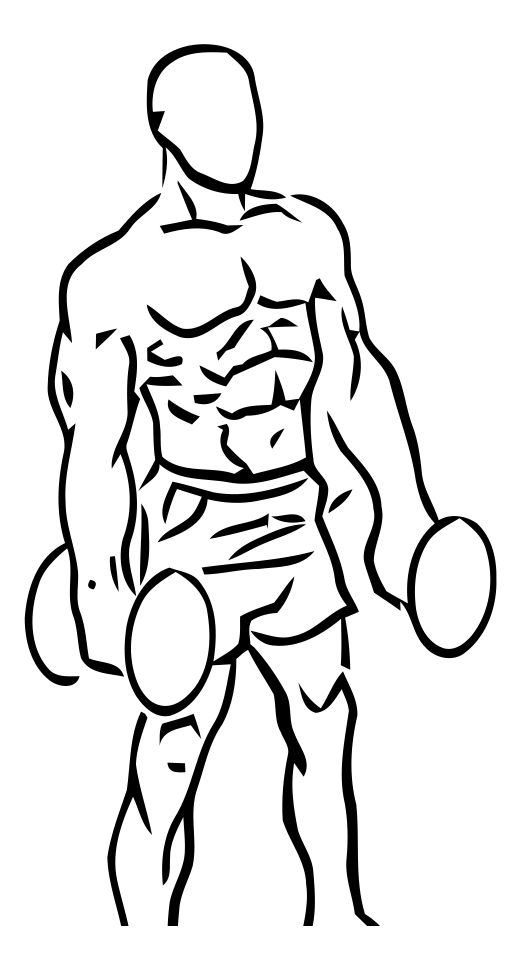
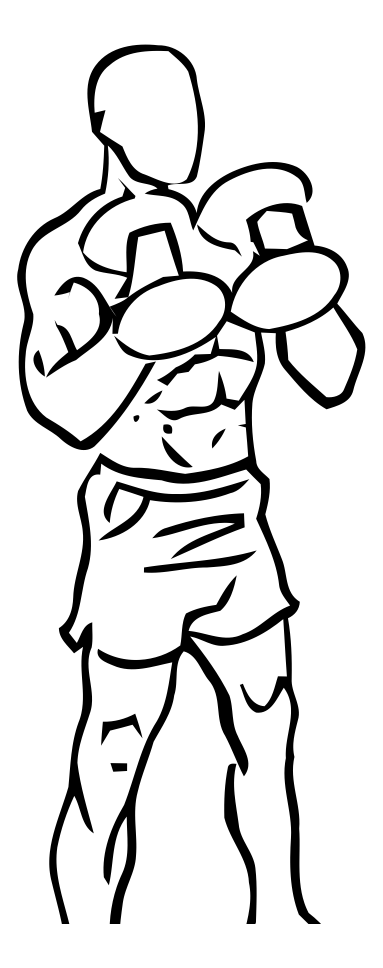
How to do the hammer curl
- Stand with a dumbbell in each hand, palms facing your body.
- Keep your elbows tucked by your sides.
- Raise the dumbbells by bending the elbows, without turning the wrist.
- Lower slowly until your arms are straight.
The palm faces your body from start to finish. If it turns forward, it has become a biceps curl.
Common mistakes
- Turning the wrist halfway up. The neutral grip stays the same for the whole rep.
- Swinging the torso. If you need momentum, reduce the weight.
- The elbow drifting out of place. It stays by your side.
- Lowering too fast. The lowering phase trains you too. Control it.
Variations
Easier
A lighter dumbbell, seated with your back supported.
Standard
Standing hammer curl, alternating or with both arms.
Harder
A cross-body hammer curl, bringing the dumbbell toward the opposite shoulder, or a slower lowering phase.
Affiliate disclosure: This article contains affiliate links (sponsored) to Amazon.com.br, a Brazilian store: prices are in Brazilian reais (BRL) and products ship only within Brazil. If you buy through these links, Xalau may earn a commission at no extra cost to you. This doesn’t change our analysis or the price. Details in our affiliate policy.
To train at home, an Acte 2 kg rubber-coated dumbbell is a good starting point. The listing is sold per unit, so you will need two.
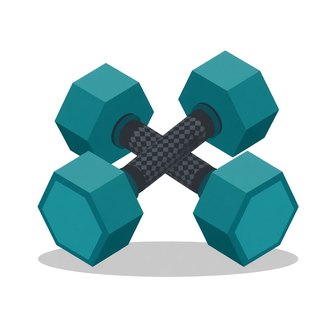
Sponsored link · Amazon.com.br (Brazil) · learn more
Acte rubber-coated dumbbells, 2 kg
Light, for lunges, arms and shoulders.
See price on Amazon.com.brWhat the studies show
In a study with 10 bodybuilders, the neutral grip of the hammer curl activated the biceps and the brachioradialis less than the palms-up grip. It also asked more of the front of the shoulder to stabilize the arm. The authors suggest using different grips in training, instead of picking only one (Coratella and colleagues, 2023).
Sets to start with
For beginners, the American College of Sports Medicine position stand suggests a load that allows 8 to 12 reps, 2 to 3 times a week. When you can do 1 or 2 more reps than planned, increase the load a little: the document talks about 2% to 10% (ACSM, 2009).
In practice, 2 to 3 sets with 1 to 2 minutes of rest are a good starting point. That number of sets is a practical suggestion, not a rule.
Who should be careful
Elbow or wrist pain calls for less load and, if it continues, an assessment by a physical therapist. Anyone with a recent arm injury should come back with guidance. Sharp pain is a signal to stop.
Informational text. It doesn’t replace an assessment by a certified trainer, physical therapist or doctor.
Read also
Where to go next
For the arm to grow, the training has to come together with food and rest. See building muscle.
References
- Coratella G et al. Biceps Brachii and Brachioradialis Excitation in Biceps Curl Exercise: Different Handgrips, Different Synergy. Sports (Basel). 2023;11(3). https://pubmed.ncbi.nlm.nih.gov/36976950/
- American College of Sports Medicine. American College of Sports Medicine position stand. Progression models in resistance training for healthy adults. Med Sci Sports Exerc. 2009;41(3):687-708. https://pubmed.ncbi.nlm.nih.gov/19204579/
Image credits
- Everkinetic 0227 (biceps-hammer-curl-with-dumbbell) illustration, by Greg Priday / Everkinetic project — https://github.com/everkinetic/data — CC BY-SA 4.0. Used without changes.