
At the gym, a lot of people call “stiff” any exercise where you lower the bar down the front of the legs by sending the hips back. There are two similar versions. In the Romanian deadlift the knees stay slightly bent. In the stiff-leg deadlift they stay almost straight.
Both work the back of the thigh and the glutes. This guide teaches the Romanian deadlift, which is usually the starting point, and shows what changes in the stiff-leg version.
Quick summary
- Muscles: hamstrings and glutes; the back works to hold the posture
- Level: intermediate
- Equipment: a barbell and plates (or dumbbells)
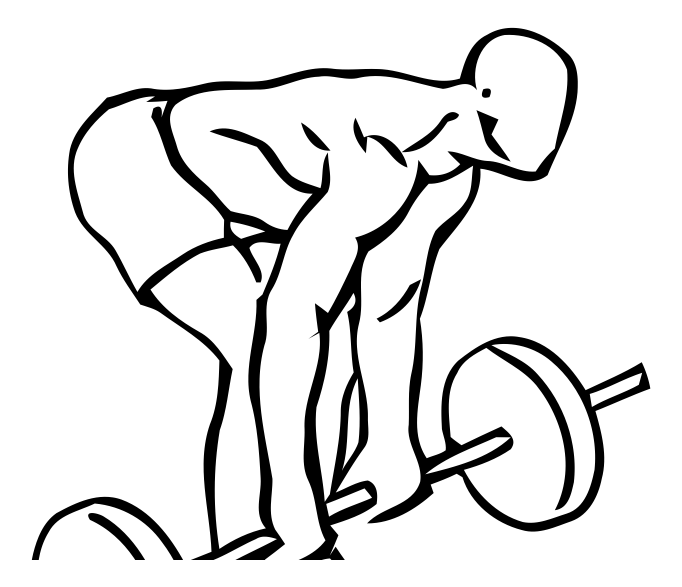
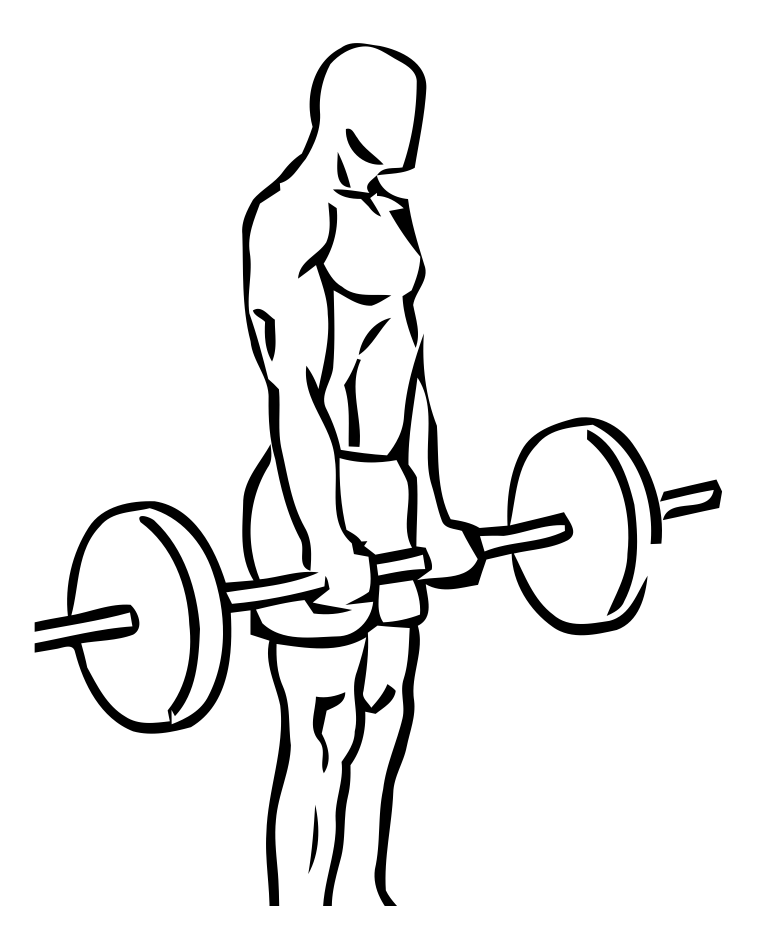
How to do the Romanian and stiff-leg deadlift
- Stand holding the bar in front of your thighs, hands about shoulder-width apart.
- Bend your knees a little and keep that angle until the end.
- Send the hips back and hinge the torso with a straight back, letting the bar slide close to your legs.
- Lower until you feel a stretch in the back of the thigh, without losing your back position.
- Return by driving the hips forward until you are standing.
In the stiff-leg deadlift, the knees stay almost straight. The rest of the movement is the same.
Common mistakes
- Squatting instead of sending the hips back. The movement comes from the hips. The knee barely changes angle.
- The back rounding to go lower. The range of motion ends where the posture can still hold.
- The bar drifting away from the legs. It should graze the thighs and the shins.
- Leaning the torso back at the top. Just stand tall.
Variations
Easier
A Romanian deadlift with two light dumbbells or with a dowel, to learn the movement.
Standard
A Romanian deadlift with a barbell.
Harder
A stiff-leg deadlift with the knees almost straight, or a Romanian deadlift standing on a low step, which increases the range of motion. One leg at a time also works: that is the single-leg deadlift.
What the studies show
A study with 10 bodybuilders compared the Romanian deadlift, the Romanian deadlift standing on a step, and the stiff-leg deadlift. The Romanian deadlift activated one of the hamstring muscles (the semitendinosus) more than the stiff-leg version, and the stiff-leg deadlift activated the gluteus maximus more. On the step, the whole back of the body worked more (Coratella and colleagues, 2022).
A systematic review found, in the Romanian deadlift, less activation of the lower back than of the hamstrings (Martín-Fuentes and colleagues, 2020).
Sets to start with
For beginners, the American College of Sports Medicine position stand suggests a load that allows 8 to 12 reps, 2 to 3 times a week. When you can do 1 or 2 more reps than planned, increase the load a little: the document talks about 2% to 10% (ACSM, 2009).
In practice, 2 to 3 sets with 1 to 2 minutes of rest are a good starting point. That number of sets is a practical suggestion, not a rule.
Who should be careful
Anyone with lower-back pain, a herniated disc or a recent hamstring injury should talk to a physical therapist or doctor before using a load. A sharp pull in the back of the thigh, sharp pain, or pain that radiates down the leg are signals to stop.
Informational text. It doesn’t replace an assessment by a certified trainer, physical therapist or doctor.
Read also
- Glute bridge: how to do it at home and progress to the hip thrust
- Lunge: how to do stationary, reverse and walking lunges
- Squat: how to do it right, common mistakes and variations
- Training: exercises, home gear and books
Where to go next
Glutes and hamstrings grow with a load that increases little by little, protein and sleep. The full picture is in building muscle.
References
- Coratella G et al. An Electromyographic Analysis of Romanian, Step-Romanian, and Stiff-Leg Deadlift: Implication for Resistance Training. Int J Environ Res Public Health. 2022;19(3). https://pubmed.ncbi.nlm.nih.gov/35162922/
- Martín-Fuentes I et al. Electromyographic activity in deadlift exercise and its variants. A systematic review. PLoS One. 2020;15(2):e0229507. https://pubmed.ncbi.nlm.nih.gov/32107499/
- American College of Sports Medicine. American College of Sports Medicine position stand. Progression models in resistance training for healthy adults. Med Sci Sports Exerc. 2009;41(3):687-708. https://pubmed.ncbi.nlm.nih.gov/19204579/
Image credits
- Everkinetic 0118 (romanian-dead-lift) illustration, by Greg Priday / Everkinetic project — https://github.com/everkinetic/data — CC BY-SA 4.0. Used without changes.